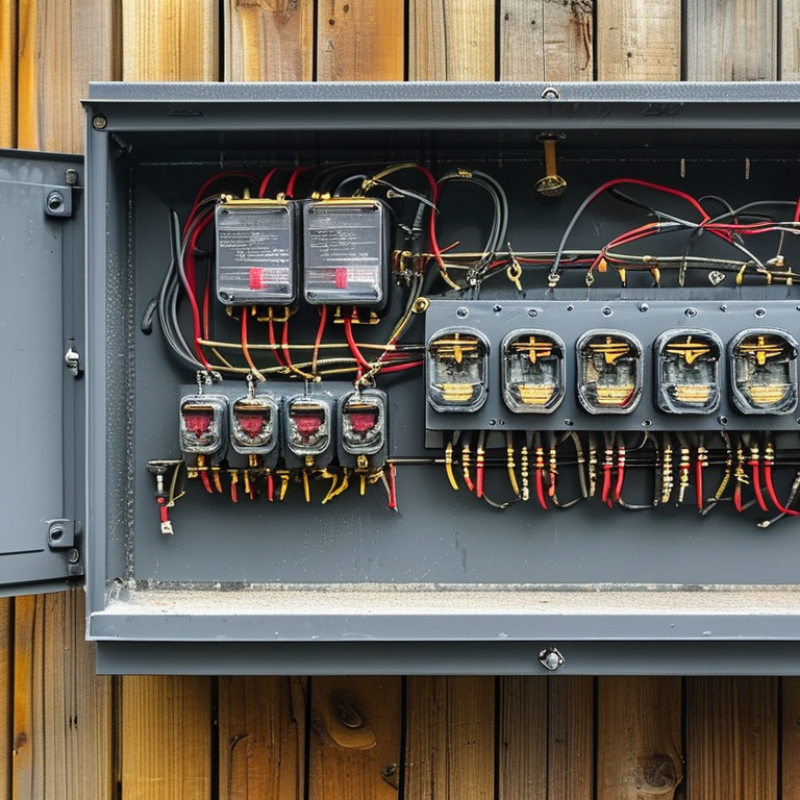
How to Choose the Right Electric Meter Box?

Time:2026-09-06 Author:Sienna
0%

Choosing the right Electric Meter Box is more than comparing prices or selecting the largest available enclosure. It affects measurement accuracy, equipment protection, maintenance access, and household safety. A suitable box must match the meter type, service rating, wiring layout, and installation environment. Outdoor locations may require weather-resistant materials, sealed openings, and protection against moisture, dust, sunlight, and accidental impact. Indoor installations still need careful attention to heat, clearance, and accessibility.

Electrical educator Mike Holt offers a useful warning: “Electricity is unforgiving.” That short statement deserves serious attention. An incorrectly sized box can crowd terminals, strain cables, or leave sensitive components exposed. Small details matter. Check the utility provider’s specifications before purchasing. Many providers require approved dimensions, socket arrangements, grounding methods, or sealing provisions. These requirements can differ between regions, even for similar homes.

This guide explains how to compare enclosure material, capacity, safety features, and installation conditions. It also considers future electrical demand, because replacing a cramped box later can become expensive and disruptive. Look closer. Measure twice. A product that appears strong online may have thin metal, weak hinges, or poorly protected cable entries. I have also found that “universal” products are not always universal in practice. A qualified electrician should verify compatibility and complete the installation where required. The right choice is not simply the box that fits today. It is the box that protects the system reliably over years of heat, rain, vibration, and routine service.

How to Choose the Right Electric Meter Box?

Assess Your Electrical Load and Metering Requirements

How to Choose the Right Electric Meter Box?

Assess Your Electrical Load and Metering Requirements

Choosing a meter box starts with understanding how much electricity your property actually needs. List major loads, including air conditioning, water heating, cooking equipment, pumps, and electric vehicle charging. Record their voltage, wattage, and expected operating time.

A simple load schedule helps reveal demand peaks. Add continuous loads carefully, then apply the requirements set by local electrical codes and the utility provider. The service rating may need to be 100, 200, or more amperes. Do not rely only on the home’s floor area. A small workshop can demand more power than a larger house.

Check the metering arrangement before selecting the enclosure. Some properties use single-phase meters, while larger buildings may require three-phase or current-transformer metering. The box must match the approved meter socket, conductor size, disconnect method, and utility specifications. It should also provide enough wiring space for safe terminations and future expansion.

Think about the installation environment. Outdoor boxes need suitable protection against rain, dust, corrosion, and accidental impact. A shaded location can reduce heat stress. Clear access matters too. Technicians should be able to read, test, and replace the meter without moving stored items.

A qualified electrician should verify the calculations and installation details. Mistakes happen, especially when future equipment is underestimated. Leave practical capacity where possible, but avoid paying for an oversized service without a real demand-based reason. The utility’s written requirements remain essential.

Confirm Utility Rules, Meter Compatibility, and Installation Standards

How to Choose the Right Electric Meter Box?

Confirm the utility’s service manual before buying an electric meter box. Requirements can vary by voltage, socket position, enclosure material, and approved meter type. A box may look suitable but still fail inspection. Check the meter form, terminal arrangement, jaw count, load rating, and whether the utility requires a bypass mechanism. The U.S. Energy Information Administration’s 2023 Form EIA-861 data show that advanced meters serve a large majority of American electricity customers. Compatibility with newer communication equipment now matters more than appearance. Fit is not enough.

Installation standards provide the second checkpoint. For North American projects, review the current National Electrical Code, utility construction standards, and applicable enclosure requirements. IEC 62208 is also relevant for empty enclosures used in low-voltage assemblies. Confirm the enclosure’s protection rating, corrosion resistance, clear working space, and cable-entry design. The International Energy Agency’s Electricity 2024 report expects global electricity demand to grow by roughly 3% annually through 2026. That growth may increase pressure on service equipment and future monitoring upgrades. Leave room for practical maintenance. A cramped box becomes a daily problem.

Ask the utility to approve the exact drawing or product specification. Do not rely only on a supplier’s general statement. Check grounding details, sealing points, inspection access, and mounting height on site. Small oversights happen. A missing knockout seal or incorrect socket depth can delay energization. Photos help, but they cannot replace local approval.

Choose the Right Box Size, Material, and Environmental Protection

How to Choose the Right Electric Meter Box?

Choosing the right electric meter box starts with accurate sizing. Measure the meter, terminals, cable entry points, and required clearance. A box should also allow safe cable bending and future maintenance. Avoid selecting the smallest available enclosure. It may fit today, but crowded wiring can make inspections and repairs difficult. Leave practical spare space for additional terminals or equipment, while following local electrical codes and utility requirements. A qualified electrician should confirm the dimensions before installation.

Material affects durability and safety. Powder-coated steel offers strength and impact resistance, while aluminum can reduce weight and resist corrosion. Durable polymer enclosures may suit locations where moisture or chemical exposure is a concern. However, material choice should match the installation environment, not personal preference. Check the enclosure’s temperature range, UV resistance, and resistance to rust. Do not forget grounding requirements for conductive boxes.

Environmental protection matters outdoors. Look for a suitable IP or equivalent protection rating against rain, dust, and accidental water spray. A sealed door, sound gasket, and downward-facing cable entries help prevent moisture problems. In coastal areas, salt air can attack unprotected metal quickly. In cold regions, condensation may form inside the box after temperature changes. Ventilation can help, but poorly placed openings may admit water. This detail is easy to miss. Review drainage, sunlight, wall exposure, and maintenance access before choosing the final enclosure.

How to Choose the Right Electric Meter Box? - Choose the Right Box Size, Material, and Environmental Protection

Selection Factor Typical Specification Recommended Option Suitable Application Important Selection Notes
Small residential box Approx. 300 × 250 × 150 mm internal clearance UV-stabilized polycarbonate or galvanized steel Single-phase service with one meter and limited wiring Confirm the meter dimensions, cable bend radius, terminal space, and local utility clearance requirements.
Medium residential or light commercial box Approx. 450 × 350 × 180 mm internal clearance Powder-coated galvanized steel or polycarbonate Larger conductors, disconnect equipment, or additional terminal blocks Allow working space for cable routing and heat dissipation; do not use the external dimensions as the usable space.
Large commercial box Approx. 600 × 450 × 200 mm internal clearance Galvanized steel, stainless steel, or reinforced fiberglass Three-phase metering, multiple meters, or auxiliary protection devices Check whether the installation requires separate compartments, barriers, sealing provisions, or current transformers.
Current-transformer metering box Approx. 800 × 600 × 250 mm or larger Powder-coated steel or stainless steel with internal mounting plate High-current commercial and industrial services Final dimensions depend on the transformer arrangement, conductor size, test blocks, and required working clearances.
Non-corrosive indoor location Minimum practical protection: IP30 to IP40, where permitted Painted steel or polycarbonate Dry electrical rooms and protected utility areas Indoor ratings are not suitable for outdoor rain, washdown, condensation, or dust exposure.
Outdoor location with rain and dust IP54 or higher; NEMA 3R is commonly used for outdoor rain protection UV-resistant polycarbonate, fiberglass, or coated steel with a sealed door Exterior walls, service entrances, and sheltered outdoor installations Use correctly rated cable glands, gaskets, locks, and drainage provisions to maintain enclosure protection.
Heavy rain, hose-directed water, or dusty outdoor area IP65 or higher; NEMA 4 may be appropriate when specified by the project Gasketed polycarbonate, fiberglass, stainless steel, or coated steel Exposed industrial areas and locations requiring stronger water protection The complete assembled enclosure must achieve the rating; drilling or poor cable entry installation can reduce protection.
Salt spray or chemical-corrosive environment IP65 or higher; NEMA 4X may be selected for corrosion-resistant construction 316 stainless steel, fiberglass, or chemically resistant polycarbonate Coastal areas, wastewater facilities, chemical-processing locations, and marine environments Check the resistance of hinges, fasteners, cable glands, and mounting hardware—not only the enclosure body.
High-sunlight or high-temperature location UV-stabilized material; typical service range approximately −20°C to +60°C, subject to product design UV-resistant polycarbonate, fiberglass, or light-colored coated metal Rooftops, open yards, and direct-sun outdoor installations Review the manufacturer’s temperature rating, solar exposure data, ventilation needs, and meter operating limits.
Mechanical security requirement Lockable door with tamper-resistant fasteners; robust construction where required Steel or reinforced non-metallic enclosure with an approved locking arrangement Public-access areas, utility service points, and commercial premises The locking method and meter-sealing arrangement must comply with the local electricity authority’s requirements.

Note: The dimensions shown are typical planning ranges rather than universal requirements. Always verify the meter manufacturer’s dimensional drawing, applicable electrical regulations, enclosure standard, and local utility approval before installation.

Compare Safety Features, Access Design, and Future Expansion Options

How to Choose the Right Electric Meter Box?

Choosing the right electric meter box starts with safety, not appearance. During site inspections, I look for a rigid, weather-resistant enclosure with secure cable entries and clear separation around live components. A strong cover should close firmly without forcing the hinges. It should also prevent accidental contact during routine meter reading. Moisture, dust, and poor ventilation can create problems over time. Check the enclosure rating and installation guidance carefully. A qualified electrician should confirm the final position and connections.

Access design deserves equal attention. Some boxes offer a small viewing window, while others require full-door access. Full access can simplify maintenance, but it needs enough clearance for safe working. I once chose a compact enclosure because it looked neat. That decision made later cable adjustments awkward. A tidy layout is not always a practical layout. Leave room for labeled circuits, terminal covers, and future inspection.

Future expansion

Future expansion is easy to overlook. Reserve space for additional circuits, communication equipment, or renewable-energy connections if they may be added later. Removable gland plates and adjustable mounting rails can reduce future drilling. However, extra capacity should not become wasted empty space. Consider the building’s likely needs, cable routes, and available wall area. Good planning keeps the box safe, readable, and adaptable.

Verify Installation Conditions, Costs, and Long-Term Maintenance Needs

How to Choose the Right Electric Meter Box?

Before choosing a meter box, verify the installation conditions at the property. Check the available wall space, mounting surface, cable entry points, and exposure to rain or direct sunlight. The box must fit the meter, protective devices, and expected cable arrangement without crowding. Measure twice. It sounds simple, but rushed measurements can create expensive rework.

Tips: Ask a licensed electrician to confirm local installation requirements, enclosure ratings, ventilation needs, and safe working clearances. Request a written cost estimate covering the box, wiring changes, labor, permits, and possible wall repairs. Do not compare products by purchase price alone. A cheaper box may require extra adapters or replacement parts.

Long-term maintenance deserves equal attention. Choose a strong enclosure with accessible terminals, secure hinges, and corrosion-resistant hardware. Inspect the box periodically for cracked covers, loose seals, water marks, heat discoloration, or unusual smells. Keep the area clear, dry, and easy to reach. I once underestimated the cost of repairing a poorly protected outdoor installation; the box looked sound until moisture reached the connections. That experience changed my checklist. Also consider future upgrades, such as additional circuits or a larger meter. A little spare capacity can reduce later disruption, although too much unused space may increase costs without practical value. Always follow the electrician’s documented recommendations and the applicable electrical rules.

FAQS

: How do I estimate the electrical load for a meter box?

: List air conditioning, water heating, cooking equipment, pumps, and vehicle charging.Record each item’s voltage, wattage, and expected operating time.A load schedule can reveal busy periods.Do not guess.A small workshop may need more power than a larger home.

What service rating might a property require?

Common service ratings include 100 or 200 amperes.The correct rating depends on calculated demand, not floor area.Continuous loads need careful treatment under local electrical requirements.A qualified electrician should verify the result.Oversizing can increase costs without providing useful capacity.

How must the meter box match the metering system?

The enclosure must suit the approved meter socket and conductor size.It must also match the disconnect method and utility requirements.Some properties use single-phase metering.Larger buildings may need three-phase or transformer-based metering.Check written requirements before purchasing the box.

What outdoor protection should a meter box provide?

Outdoor boxes should resist rain, dust, corrosion, and accidental impact.Check the enclosure rating and installation instructions.A shaded wall can reduce heat stress during hot afternoons.Secure cable entries help limit moisture problems.Ventilation still matters.

How much wiring space should the enclosure contain?

Leave enough room for safe conductor terminations and labeled circuits.The meter should not press against cables or terminal covers.Future wiring may need additional space.A very compact box can make adjustments awkward.Neat is not always practical.

How can I check the box’s access design before buying?

Open the box and inspect the viewing window, hinges, latch, and internal layout.The meter should be readable without removing unnecessary panels.Technicians need clear working space for testing and replacement.Test the latch gently.A stiff latch may worsen outdoors.

What future expansion should I consider?

Reserve practical space for extra circuits and communication equipment.Renewable-energy connections may also require room later.Removable gland plates can reduce future drilling.Adjustable mounting rails may simplify modifications.Do not create useless empty space.

Where should the meter box be installed?

Choose a location with clear access and enough working clearance.Technicians should not move stored items to reach the meter.Avoid cramped corners, blocked walls, and areas exposed to repeated impact.The final position must suit cable routes and utility instructions.I once prioritized appearance over access.That choice caused trouble later.

Conclusion

Choosing the right Electric Meter Box begins with understanding your property’s electrical load, service capacity, and metering arrangement. Review the expected current demand, number of circuits, and possible future upgrades before selecting a model. It is also essential to confirm local utility requirements, meter compatibility, wiring methods, clearances, and installation standards. These checks help ensure the box can be approved and integrated safely with the electrical system.

Next, evaluate the box’s size, construction material, and environmental protection based on its location and operating conditions. Consider resistance to moisture, dust, impact, corrosion, and temperature changes. Safety features such as secure covers, insulation, suitable ventilation, and controlled access should also be assessed. Choose a design that allows convenient inspection and maintenance while leaving room for future expansion. Finally, verify installation conditions, labor and material costs, service accessibility, and long-term maintenance needs so the selected Electric Meter Box delivers reliable performance and practical value over time.

Sienna

Sienna

Sienna is a skilled marketing professional with a deep expertise in our company’s core products and services. With a passion for innovation and detail, she plays a pivotal role in crafting insightful blog posts that not only highlight the unique features of our offerings but also provide valuable......